Chemistry - Online Test
Q1. The most common oxidation states of nitrogen are
Answer : Option C
Explaination / Solution:
N shows -3 in NH3 , +3 in HNO2 and +5 in HNO3 .
Q2. In an open system, which if the following take place ?
Answer : Option B
Explaination / Solution:
In open system there is flow of matter and energy in and out of the system or vice versa.
For example, an air compressor in which the air enters at a low pressure and exit at high pressure and there is energy interaction with the surrounding
Q3. Which among the following statement is correct?
Answer : Option C
Explaination / Solution:
All ores are minerals but vice versa is not true. Because ores are the minerals from which metal can be profitably extracted.
Q4. The total energy of an electron in the first excited state of the hydrogen atom is about −3.4 eV. What is the kinetic energy of the electron in this state?
Answer : Option B
Explaination / Solution:
Total energy of the electron, E = −3.4 eV
Kinetic energy of the electron is equal to the negative of the total energy.
K = −E = − (− 3.4) = +3.4 eV
Hence, the kinetic energy of the electron in the given state is +3.4 eV.
Q5. Dichloro-diphenyl-trichloro-ethane (DDT), plastic materials, heavy metals etc. belong to which of the following category of pollutants in environment :
Answer : Option D
Explaination / Solution:
DDT, plastic materials and heavy metals like cadmium, mercury and arsenic are not degradable by natural biological processes by bacteria or any other microbe. Therefore they are non-biodegradable.
Q6. The inner transition metals of 5 f series is known as
Answer : Option D
Explaination / Solution:
inner transition metals of 5 f series is known as Actinoids.
Q7. Give the name of the following compound:

Answer : Option C
Explaination / Solution:
This is vanillin.
Q8. Ligand en is an example of
Answer : Option D
Explaination / Solution:
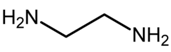
Q9. Hydrogen is unique in behaviour because of its
Answer : Option D
Explaination / Solution:
It has extremely small size with no neutron. So it can lose and gain electron which make it unique.
Q10. Paul Ehrlich was awarded Nobel Prize in medicine in 1908 for discovering the medicine to treat
Answer : Option C
Explaination / Solution:
He is awarded Nobel Prize in medicine for discovering in Syphilis.