Chemistry - Online Test
Q1. Study of rate of chemical reaction is known as
Answer : Option D
Explaination / Solution:
Chemical Kinetics deals with rate of a Chemical reactions.
Q2. Which catalyst is used in contact process?
Answer : Option A
Explaination / Solution:
V2O5 is used as catalyst in contact process .
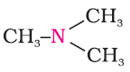
Q3. The following compounds are called
Answer : Option D
Explaination / Solution:
The following compound is tertiary amine.
Q4. When the rate of evaporation is equal to the rate of condensation, it is called
Answer : Option D
Explaination / Solution:
At equilibrium, the rate of evaporation is equal to the rate of condensation.
It may be represented by H2O (l) ⇌ H2O (vap)
The double half arrows indicate that the processes in both the directions are going on simultaneously. The mixture of reactants and products in the equilibrium state is called an equilibrium mixture
Q5. Physical behavior of the states differs greatly even though chemical behavior of the three states is identical because
Answer : Option C
Explaination / Solution:
chemical properties depend on intramolecular bonding forces whereas physical properties depend on intermolecular nonbonding forces
Q6. Glycerol is
Answer : Option C
Explaination / Solution:
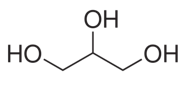
Glycerol and trihydroxypropane are common names. The IUPAC name is propane-1,2,3-triol. The common name glycerol comes from the root glyco- which means sweet. Glucose, glycogen, and glycerin (another name for glycerol) have the same etymology.
Glycerol and trihydroxypropane are common names. The IUPAC name is propane-1,2,3-triol. The common name glycerol comes from the root glyco- which means sweet. Glucose, glycogen, and glycerin (another name for glycerol) have the same etymology.
Q7. Which of these fuels given below is not a hydrocarbon?
Answer : Option B
Explaination / Solution:
Because hydrocarbons contain both C and H and hence Hydrogen is not a hydrocarbon. .
Q8. Example of solution of liquid in gas is
Answer : Option A
Explaination / Solution:
Solute is water (liquid) and solvent is gas( air).
Q9. Which among the following is not an example of amorphous solids?
Answer : Option B
Explaination / Solution:
Quartz is not amorphous solids
Q10. Mendeleev 'Periodic Law' states that
Answer : Option B
Explaination / Solution:
If the elements are arranged in the order of their increasing atomic weights, after a regular interval similiar properties of elements are repeated.