General Science - Online Test

Q1. Success of an organism in nature can be determined by
Answer : Option D
Explaination / Solution:

Success of an organism in nature can be determined by measuring population size and biomass of the organism. An organism having large number of species is more successful than those with lesser numbers.

Q2. Main function of Nickel (Ni2+) in leaves and root is
Answer : Option B
Explaination / Solution:

Main function of Nickel ions in leaves and root is metabolism of urea and ureides to form amino acids and protein in plant body.

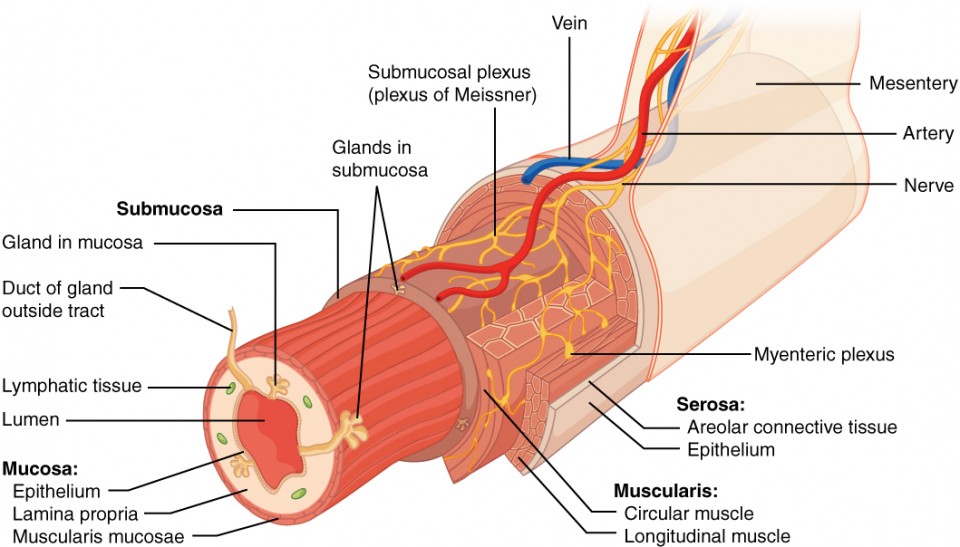
Q3. Correct sequence of layers in gut wall from inside to outside is :
Answer : Option B
Explaination / Solution:

The wall of alimentary canal is made of four layers performing different functions. The inner most layer is called mucosa followed by submucosa,muscularis and serosa. Theses layers are made of different kind of tissues to perform different function.

Q4. Copolymerisation of 1, 3 – butadiene and acrylonitrile needs
Answer : Option A
Explaination / Solution:

Copolymerisation of 1,3-butadiene and acrylonitrile requirw peroxide catalyst.

Q5. Asexual reproduction is common in
Answer : Option D
Explaination / Solution:

Asexual reproduction is common in Protists and Monera. Both these kinds include organisms having single celled body. Binary and multiple fissions are generally followed for asexual mode of reproduction.

Q6. A person with defective eyesight is unable to see objects clearly nearer than 1.5 m. He wants to read a book placed at a distance of 30 cm from his eyes. Find the power of the lens he requires for his spectacles
Answer : Option B
Explaination / Solution:
No Explaination.


Q7. The incubation period of Hepatitis 'B' virus is
Answer : Option C
Explaination / Solution:

Incubation period is the time elapsed between exposure to a pathogenic organism, a chemical, or radiation, and when symptoms and signs are first apparent. The incubation period of the hepatitis B virus is 75 days on average, but can vary from 30 to 180 days. The virus may be detected within 30 to 60 days after infection and can persist and develop into chronic hepatitis B.

Q8. The increasing order of bond dissociation energies of following species is -----?
Answer : Option C
Explaination / Solution:

As bond order increases bond dissociation energy also increases .

Thus 

(i) the triple bonded    with bond order 

=  3

has the  highest bond dissociation energy .

(ii)   The doubly bonded   with  bond order 

= 2 

has lesser bond dissociation energy than  

(iii)   and    both  are single bonded  having the same bond order 

= 1   

but  , the  electron - electron  repulsive force  ( e  - e repulsion )  is maximum in  a  molecule   due to its small size. This accounts  for the lower bond dissociation energy of   as compared to  


Q9. The basic economic problem arises in
Answer : Option B
Explaination / Solution:

Economic problem arises mainly due to two reasons- (i) human wants are unlimited (ii) means to satisfy human wants are scarce. The problem of scarcity is faced by an individual and the society. With wants unlimited and resources scarce, our wants cannot be fulfilled.

Q10. Mohan lacks one or more type of cone cells in the retina of his eye. So he will suffer from :
Answer : Option B
Explaination / Solution:

Colour perception of human eye is due to presence of cones in their retina. If one of more kinds of cones are missing from retina of eye, the person suffer from genetic disease called colour blindness.