General Science - Online Test
Q1. Which of the following is a secondary amine?
Answer : Option C
Explaination / Solution:
N of this amine is bonded to two carbon atoms, therfore it is a secondary amine.
Q2. Biopiracy is
Answer : Option A
Explaination / Solution:
Biopiracy describes a practice in which indigenous knowledge of nature, originating with indigenous peoples, is used by others for profit, without permission from and with little or no compensation or recognition to the indigenous people themselves.
Q3. For ions composed of only one atom, the oxidation number is equal to the
Answer : Option A
Explaination / Solution:
By definition, the oxidation number of an atom is the charge that atom would have if the compound was composed of ions.
The oxidation number of simple ions is equal to the charge on the ion. The oxidation number of sodium in the Na+ ion is +1, for example, and the oxidation number of chlorine in the Cl- ion is -1.
Q4. Which of the following methods of contraception protect the individual from sexually transmitted disease as well as unwanted pregnancy?
Answer : Option D
Explaination / Solution:
Condom prevents the individual from both unwanted pregnancy as well as sexually transmitted diseases because it prevents the transfer of body fluid between two partners.
Q5. The major contribution of C.V. Raman was
Answer : Option A
Explaination / Solution:
The Indian physicist C.V. Raman helped the growth of science in his country. He received the Nobel Prize for Physics in 1930 for the discovery that when light passes through a transparent material, some of the light changes in wavelength. This phenomenon is now called Raman scattering.
Q6. Can the net indirect taxes be positive?
Answer : Option D
Explaination / Solution:
No Explaination.
Q7. A variable capacitor and an electroscope are connected in parallel to a battery. The reading of the electroscope would be decreased by
Answer : Option C
Explaination / Solution:
An electroscope is a device which measures the potential difference. If it is connected in parallel to the capacitor, the potential across it will be equal to the potential across the capacitor, which is equal to the potential across the battery. On decreasing the battery potential, the potential difference across the electroscope reduces and hence the reading reduces. While the capacitor is connected to the battery, Placing a dielectric between the plates, or decreasing the distance between the plates or increasing the area of the plates will not change the potential difference across it; since it will always remain equal to the potential difference maintained by the battery. In the cases B, C and D, The capacitance of the capacitor , however increases ; but this increase happens due to increase in the charge stored in the capacitor while the potential remains constant.
Q8. The molar mass of C6 H10 O5 is
Answer : Option A
Explaination / Solution:
Molar massof C6 H10 O5
= Sum of the atomic masses of six C atoms , ten H atoms & six O atoms
thus , substituting the required atomic masses of
C= 12 ,
H = 1 , &
O = 16 ,
we get ,
Molar mass of C6 H10 O5
= [ 6(12)+10(1)+5(16) ] u
= (72 + 10 + 80 ) u
=162 u
Q9. The doctrine of consumer’s surplus is based on?
Answer : Option C
Explaination / Solution:
No Explaination.
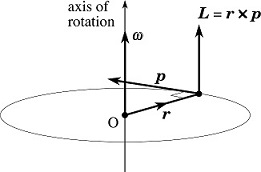
Q10. When a mass is rotating in a plane about a fixed point, its angular momentum is directed along
Answer : Option B
Explaination / Solution:
cular to both
and that is along the axis of rotation according to right hand screw rule.