General Science - Online Test
Q1. _______ refers to relative distribution of a country’s workforce among various sectors of economic activity
Answer : Option C
Explaination / Solution:
This refers to the aggregate distribution of occupations in society, classified according to skill level, economic function, or social status.
Q2. If a reaction proceeds with a uniform rate throughout, the reaction is
Answer : Option B
Explaination / Solution:
Rate of reaction is independent of concentration of reactant.
Q3. Time series is the most important format of ______
Answer : Option D
Explaination / Solution:
An arithmetic line graph is also called time series graph. In this graph time (hour, day/date, week, month, year, etc.) is plotted along x-axis and the value of the variable (time series data) along y-axis.
Q4. Rural population needs long term loan
Answer : Option D
Explaination / Solution:
Longer-term agricultural financing is needed for longer-term investments such as better storage facilities, food/commodity processing facilities and equipment/mechanization.
Q5. A man can swim with a speed of 4.0 km/h in still water. How long does he take to cross a river 1.0 km wide if the river flows steadily at 3.0 km/h and he makes his strokes normal to the river current? How far down the river does he go when he reaches the other bank?
Answer : Option A
Explaination / Solution:
Speed of the man, vm = 4 km/h
Width of the river = 1 km
Time taken to cross the river =
Speed of the river, vr = 3 km/h
Distance covered with flow of the river = vr × t
= 750 m
Q6. Which among the following is an example of homogenous catalyst?
Answer : Option A
Explaination / Solution:
Homogeneous catalysis is one in which catalyst and reactants are both in same phase.
Q7. Gini Index is related to
Answer : Option C
Explaination / Solution:
The Gini index or Gini coefficient is a statistical measure of distribution developed by the Italian statistician Corrado Gini in 1912. It is often used as a gauge of economic inequality, measuring income distribution or, less commonly, wealth distribution among a population. The coefficient ranges from 0 (or 0%) to 1 (or 100%), with 0 representing perfect equality and 1 representing perfect inequality. Values over 1 are theoretically possible due to negative income or wealth.
Q8. At the end of meiosis II how many cells are formed?
Answer : Option B
Explaination / Solution:
Four haploid cells are formed at the end of meiosis II. It is reductional division resulting in halving of chromosome number in daughter cells.
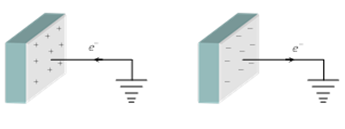
Q9. When a negatively charged conductor is connected to earth,
Answer : Option A
Explaination / Solution:
After earthing a positively charged conductor electrons flow from earth to conductor and if a negatively charged conductor is earthed then electrons flows from conductor to earth.
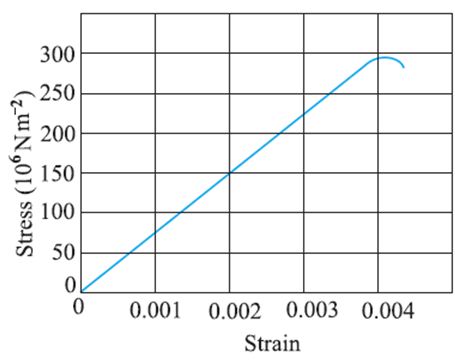
Q10. Figure shows the strain-stress curve for a given material. What is the approximate yield strength for this material?
Answer : Option C
Explaination / Solution:
No Explaination.