General Science - Online Test
Q1. Dinoflagellates possess condensed chromosomes even in interphase, their nucleus is called
Answer : Option B
Explaination / Solution:
Dinoflagellates are unicellular protists. They possess condensed chromosomes even during interphase. Their nucleus is called as mesokaryon.
Q2. In China how much percentage of workforce is engaged in agriculture
Answer : Option D
Explaination / Solution:
In the late 1980s, China remained a predominantly agricultural country. As of 1985 about 63 percent of the population lived in rural areas, and nearly 63 percent of the national labor force was engaged in agriculture.
Q3. Gauss's law states that
Answer : Option D
Explaination / Solution:
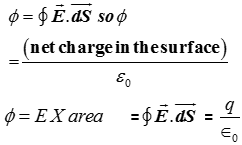
Gauss Theorem--- According to Gauss theorem the electric flux through a closed surface is given by times
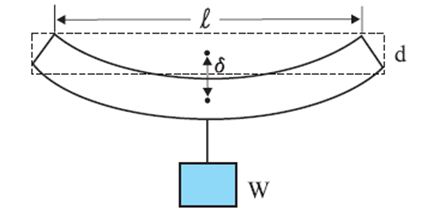
Q4. For a bar of length l, breadth b, and depth d as shown in figure the deflection is given by
Answer : Option D
Explaination / Solution:
No Explaination.
Q5. The first step of recombinant DNA technology involves
Answer : Option D
Explaination / Solution:
The first step of recombinant DNA technology involves isolation of genetic material. This is performed by using enzymes that hydrolyzes the outer covering of cell as cellulase, chitinases pectinase etc.
Q6. During urine formation, the tubular cells secrete ------------------ into the filtrate.
Answer : Option D
Explaination / Solution:
The substances that are secreted into the tubular fluid (for removal from the body) include:
- Potassium ions (K+),
- Hydrogenions (H+),
- Ammonium ions (NH4+),
- creatinine,
- urea,
- some hormones,
- and some drugs (e.g. penicillin).
Q7. Kelvin-Planck statement of Second Law of Thermodynamics states that
Answer : Option B
Explaination / Solution:
it is impossible to devise a cyclically operating device, the sole effect of which is to absorb energy in the form of heat from a single thermal reservoir and to deliver an equivalent amount of work. This implies that it is impossible to build a heat engine that has 100% thermal efficiency.
Q8. Which of the following is an example of divergent evolution?
Answer : Option A
Explaination / Solution:
In divergent evolution, same structure developed along different directions due to adaptation to different needs. Homologous organs are those organs that have common origin but performing different functions.
Q9.
Critical temperature of carbon dioxide is the highest temperature at which liquid carbon dioxide is observed. Above this temperature
Answer : Option C
Explaination / Solution:
Tc is the highest Temp where a gas can exist in liquid state. Above this no liquid state exist. It is impossible to compress the gas into liquid above critical temperature, no matter what ever amount of pressure is applied.
Q10. In order to decide what course the reaction adopts and make a qualitative prediction about the effect of a change in conditions on equilibrium we use
Answer : Option D
Explaination / Solution:
Le Chaterlier principle is used.