General Science - Online Test
Q1. Various phases of cell cycle are controlled by proteins
Answer : Option C
Explaination / Solution:

Cycline and CDKs can modify various protein substrates involved in cell cycle progression. Cancer results due to mutations of these proteins leading to uncontrolled cell divisions.

Q2. The path of a projectile is
Answer : Option D
Explaination / Solution:

A particle with a vertical and horizontal velocity travelling in a gravitational field will trace out a parabola.

Q3. The colloidal solution of two immiscible liquids is called
Answer : Option A
Explaination / Solution:

Dispersed phase is liquid, dispersion medium is liquid.

Q4. UNDP stands for
Answer : Option B
Explaination / Solution:

The United Nations Development Programme (UNDP) works to eradicate poverty and reduce inequalities through the sustainable development of nations.It provides expert advice, training and grants support to developing countries, with increasing emphasis on assistance to the least developed countries.

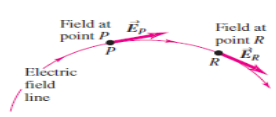
Q5. At any point on S on an electric field line
Answer : Option B
Explaination / Solution:

When a tangent is drawn at any point on field line then that tangent gives the direction of electric field at that point


Q6. Young’s modulus Y is
Answer : Option A
Explaination / Solution:

The ratio of stress and strain is called modulus of elasticity is the characteristic of the material. they are (a) Young's modulus (b) Shear Modulus (c) Bulk modulus

Young's Modulus is denoted by Y and is given by  the ratio of tensile (or compressive) stress (σ)" role="presentation" style="display: inline; line-height: normal; word-spacing: normal; word-wrap: normal; white-space: nowrap; float: none; direction: ltr; max-width: none; max-height: none; min-width: 0px; min-height: 0px; border: 0px; padding: 0px; margin: 0px; position: relative;"> to the longitudinal strain (ε)" role="presentation" style="display: inline; line-height: normal; word-spacing: normal; word-wrap: normal; white-space: nowrap; float: none; direction: ltr; max-width: none; max-height: none; min-width: 0px; min-height: 0px; border: 0px; padding: 0px; margin: 0px; position: relative;">

Y = tensile stress/longitudinal strain

Y=σ/ϵ" role="presentation" style="display: inline; line-height: normal; word-spacing: normal; word-wrap: normal; white-space: nowrap; float: none; direction: ltr; max-width: none; max-height: none; min-width: 0px; min-height: 0px; border: 0px; padding: 0px; margin: 0px; position: relative;">


Q7. DNA is extracted by
Answer : Option C
Explaination / Solution:

The piece of DNA obtained by gel electrophoresis contains agrose gel also. Ethanol precipitation is a commonly used technique for concentrating and de-salting nucleic acids (DNA or RNA) preparations in aqueous solution. The basic procedure is that salt and ethanol are added to the aqueous solution, which forces the precipitation of nucleic acids out of solution.

Q8. Which of the following is not a part of glomerular filtrate?
Answer : Option A
Explaination / Solution:

Glomerular filtrate contains glucose, inorganic salts and creatinine but it do not contain globulins protein.

Q9. The heat engine takes
Answer : Option A
Explaination / Solution:

a heat engine converts heat energy to mechanical work by using the temperature difference between a hot "source" and a cold "sink". Heat is transferred from the source, through the "working body" of the engine, to the "sink", and in this process some of the heat changes into work by using the qualities of the gas or liquid inside the engine.

Q10. By studying analogous structures we look for
Answer : Option B
Explaination / Solution:

In evolutionary biology, the term analogous structures pertain to the various structures in different species having the same function but have evolved separately, thus do not share common ancestor. Examples of analogous structures are as follows: wings of insects and birds used for flying