Mathematics - Online Test
recalling the general form of a circle as
(i) It is a quadratic equation in both x and y.
(ii) Coefficient of  = Coefficient of .
(iii) There is no term containing xy i.e., the coefficient of xy is zero.
(iv) radius is
To satisfy (i) and (ii) condition we have
To satisfy (iii) condition we have
To satisfy (iv) and as we cant have neagtive sign in root so
First we will fix any one digit in a fixed position .Then we have the remaining 4 digits can be arranged in 4! different ways.
Which means each of the five digits can appear in each of the five places in 4! times.
Hence the sum of the digits in each position is
Now to find the sum of these numbers formed we have to consider the place values for these digits
So the sum of all the numbers which can be formed by using the digits 1 , 3 , 5 , 7 ,9=
 is
is is given by: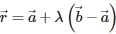
equal to
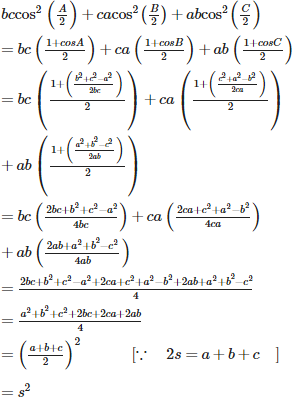
Required area :
= = == = 1sq.unit
At (0, 0) the curve
Let P(x,y) represent the complex number Z=x+iy in the complex plane(Argand plane) and let O(0,0) be the origin
Then we have OP=
Here Z=1+i so that P(x,y)=P(1,1)
Hence OP=