Biology - Online Test
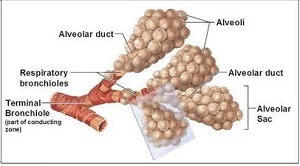
Q1. The gaseous exchange portion of the human respiratory tract include/s :
Answer : Option D
Explaination / Solution:
Alveolar ducts are tiny ducts that connect the respiratory bronchioles to alveolar sacs, each of which contains a collection of alveoli (small mucus-lined pouches made of flattened epithelial cells). They are tiny end ducts of the branching airways that fill the lungs.
Q2. In which crops is the method of mass selection applied
Answer : Option B
Explaination / Solution:
In cross pollinated plants, the newly developed plants have variation and some plant have new traits. Mass selection method is used to select better variety of plants from large number of variant.
Q3. Which of the following is a gene sanctuary
Answer : Option A
Explaination / Solution:
A gene sanctuary is an area where plants are conserved. It includes both biosphere reserves as well as national parks.
India has set up its first gene sanctuary in the Tura range of Meghalaya for wild relatives of citrus. Efforts are also being made to set up gene sanctuaries for banana, sugarcane, rice and mango.
Q4. A chemical acts slowly, requiring hours to take effect. It may pass in and out of many cells in which they have no effect. When they find appropriate receptor in their target cell they bind to it. Chemical is :
Answer : Option B
Explaination / Solution:
Aldosterone hormone is a chemical that acts slowly, require hours to take effect. It may pass in and out of many cells in which they have no effect. When they find appropriate receptor in their target cell they bind to it to bring about changes.
Q5. Which of these is a fresh water sponge?
Answer : Option C
Explaination / Solution:
Spongilla is a genus of freshwater sponges in the family Spongillidae found in lakes and slow streams. Sponges of the genus Spongilla attach themselves to rocks and logs and filter the water for various small aquatic organisms such as protozoans, bacteria, and other free-floating pond life. Unlike marine sponges, freshwater sponges are exposed to far more adverse and variable environmental conditions, so they have developed gemmules as a means of dormancy.
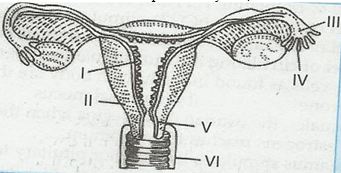
Q6. In sectional view of female reproductive system, Label (III) and (IV).
Answer : Option C
Explaination / Solution:
Infundibulum and fimbriae are the parts of fallopian tube (oviduct) through which ovum released from ovary passes towards uterus. Fertilisation of ovum occurs in fallopian tube.
Q7. Which of the following are aromatic amino acids?
Answer : Option D
Explaination / Solution:
Based on number of amino and carboxyl groups, there are acidic (e.g., glutamic acid), basic (lysine) and neutral (valine) amino acids. Similarly, there are aromatic amino acids (tyrosine, phenylalanine, tryptophan).
Q8. Heterozygous tall plants were crossed with dwarf plants what will be the ratio of dwarf plants in the following progeny?
Answer : Option B
Explaination / Solution:
Heterozygous tall plant (Tt) is crossed with homozygous dwarf (tt) the percentage of dwarf plants is 50 percent.
Q9. Which one is not a preparatory phase or energy spending phase of Glycoloysis
Answer : Option B
Explaination / Solution:
Formation of pyruvate is not a prerparatory phase or energy spending phase of Glycolysis. In this phase one ATP molecule is released.
Q10. Which of the following is correctly matched?
Answer : Option B
Explaination / Solution:
The T-wave represents the return of the ventricles from excited to normal state.