Biology - Online Test
Q1. In animal cells, the first stage of glucose break down is
Answer : Option A
Explaination / Solution:
In animal cells, like muscles during exercise, when oxygen is inadequate for cellular respiration pyruvic acid is reduced to lactic acid by lactate dehydrogenase. The reducing agent is NADH+ and H+ which is reoxidised to NAD+ in both the processes.
Q2. The layer of heart pericardium which checks its overstretching and overfilling as well as also protects heart from mechanical injury is :
Answer : Option C
Explaination / Solution:
Pericardium is protective covering of heart. Pericardium is made of different layers to perform different functions. The layer of heart pericardium which checks its overstretching and overfilling as well as protects heart from mechanical injury is fibrous pericardium.
Q3. Biogas is a
Answer : Option A
Explaination / Solution:
Anaerobic decomposition of biomass like cow dung release biogas. This biogas contains mainly methane gas and can be used as fuel for cooking and lighting.
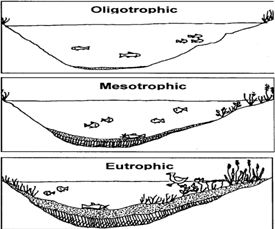
Q4. Correct sequence for the amount of dissolved oxygen in water body is:
Answer : Option A
Explaination / Solution:
Dissolve oxygen in water bodies is utilized by aquatic organisms for respiration. Oligotrophic have least dissolved oxygen followed by mesotrophic and eutropic have highest concentration of dissolved oxygen.
Q5. Which is not a function of leaves?
Answer : Option A
Explaination / Solution:
Leaves perform the function of photosynthesis, exchange of gases and transpiration to loose excess of water. Formation of new buds is not a function of leaves.
Q6. Within the embryo sac, three cells at chalazal end are called
Answer : Option D
Explaination / Solution:
The embryo sac is 8 nucleate, 7 celled structure. The three at micropylar ends are called egg Synergids and three at chalazal end are called antipodal cell. The remaining two at center forms the polar bodies.
Q7. Which phase of M-stage is called as invisible phase?
Answer : Option D
Explaination / Solution:
S-phase of M-stage is called as invisible phase of cell cycle because during this phase synthesis of DNA takes place which is not visible to the naked eye. There is only imbalance of Nucleoplasmic ratio.
Q8. The nuclease will act on
Answer : Option C
Explaination / Solution:
A nuclease (also archaically known as nucleodepolymerase or polynucleotidase) is an enzyme capable of cleaving the phosphodiester bonds between monomers of nucleic acids. Nucleases variously effect single and double stranded breaks in their target molecules.
There are two primary classifications based on the locus of activity. Exonucleases digest nucleic acids from the ends. Endonucleases act on regions in the middle of target molecules. They are further subcategorized as deoxyribonucleases and ribonucleases. The former acts on DNA, the latter on RNA.
Q9. The epithelial cells of Bowman’s capsule are called:
Answer : Option A
Explaination / Solution:
Podocytes are cells in the Bowman's capsule in the kidneys that wrap around capillaries of the glomerulus. The Bowman's capsule filters the blood, retaining large molecules such as proteins while smaller molecules such as water, salts, and sugars are filtered as the first step in the formation of urine.
Q10. The sequence of origin of life may be considered as
Answer : Option A
Explaination / Solution:
The sequence of origin of life may be as first formation of nucleic acid (DNA and RNA) followed by amino acids to form protein. Chlorophyll evolved in plants to become autotrophic from chemoheterotrophic.