Electrical Engineering - Online Test
Q1. Given f(t) and g(t) as shown below:
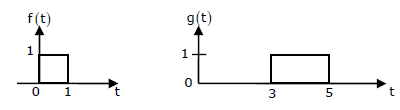
The Laplace transform of g(t) is
Answer : Option C
Explaination / Solution:
No Explaination.
Q2. The measurement system shown figure uses three sub-system in cascade whose gains are
specified as G1, G2 and 1/G3. The relative small errors associated with each respective
subsystem G1, G2 and G3 are ε1 + ε2 and ε3. The error associated with the output is

Answer : Option C
Explaination / Solution:
No Explaination.
Q3. 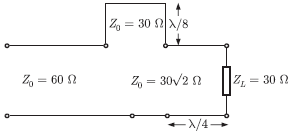
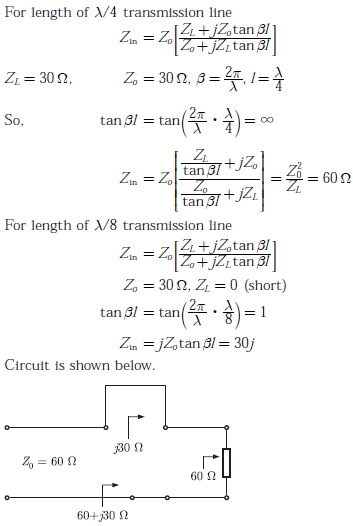
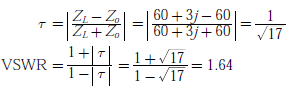
In the circuit shown, all the transmission line sections are lossless. The Voltage Standing Wave Ration(VSWR) on the 60 Ω line is
Answer : Option B
Explaination / Solution:
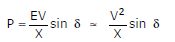
Q4. For a fixed value of complex power flow in a transmission line having a sending end voltage V, the real power loss will be proportional to
Answer : Option C
Explaination / Solution:
Q5. In the Digital-to-Analog converter circuit shown in the figure below, VR = 1V and R = 1kΩ
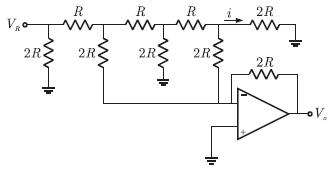
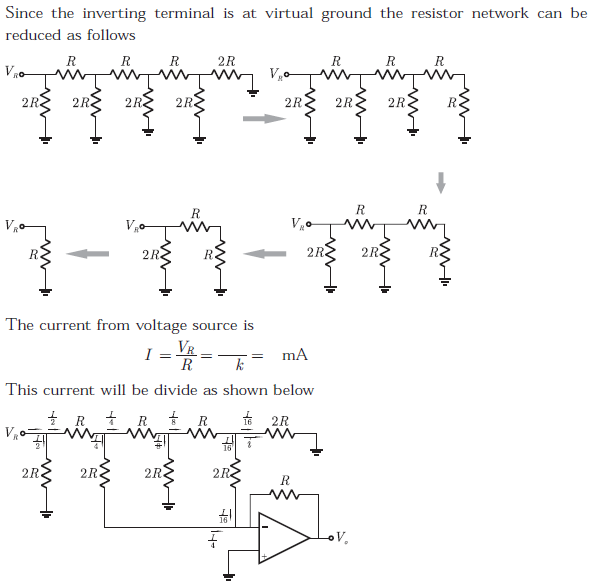
The current i is
Answer : Option B
Explaination / Solution:

Q6. If fixed positive charges are present in the gate oxide of an n-channel enhancement type MOSFET, it will lead to
Answer : Option A
Explaination / Solution:
If fixed positive charges are present is the gate oxide of an n-channel enhancement type MOSFET, it will lead to a decrease in the threshold voltage.
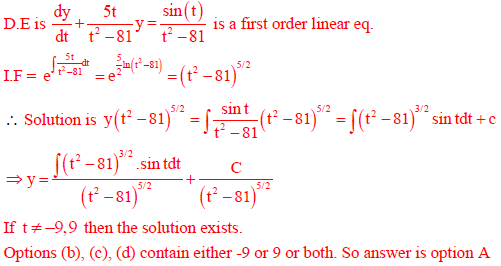
Q7. Consider the differential equation  . There exists a
unique solution for this differential equation when t belongs to the interval
. There exists a
unique solution for this differential equation when t belongs to the interval
. There exists a
unique solution for this differential equation when t belongs to the interval
Answer : Option A
Explaination / Solution:
Q8. 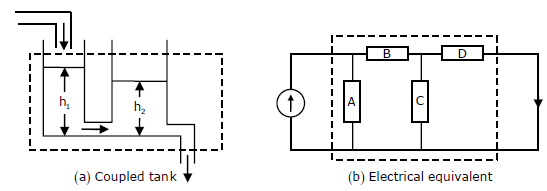
If the electrical circuit of figure (b) is an equivalent of the coupled tank system of figure (a), then
Answer : Option D
Explaination / Solution:
No Explaination.
Q9. The two inputs of a CRO are fed with two stationary periodic signals. In the X-Y mode, the screen shows a figure which changes from ellipse to circle and back to ellipse with its major axis changing orientation slowly and repeatedly. The following inference can be made from this.
Answer : Option C
Explaination / Solution:
No Explaination.
Q10. How many 200W/220V incandescent lamps connected in series would consume the same total power as a single 100W/220V incandescent lamp?
Answer : Option D
Explaination / Solution:
No Explaination.