Zoology - Online Test
Q1. Match the following :
a) Fibrous joint
b) Hinge joint
c) Ball and socket joint
d) Ellipsoid joint
(i)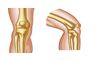
(ii)
(iii)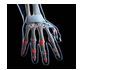
(iv)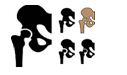
a) Fibrous joint
b) Hinge joint
c) Ball and socket joint
d) Ellipsoid joint
(i)
(ii)
(iii)
(iv)
Answer : Option C
Explaination / Solution:
Fibrous joint is present in skull bone, hinge joint is present in knee, ball and socket joint is present in shoulder and forelimb and ellipsoid joint is present in wrist of human beings.
Q2. Most industrialized nations are rich financially but poor in
Answer : Option A
Explaination / Solution:
Most industrialized nations are rich financially but poor in biodiversity and traditional knowledge. Biodiversity and traditional knowledge related to bio-resources are can be exploited to develop modern applications.
Q3.
Identify the intra-uterine contraceptive device from the figure given below
Answer : Option A
Explaination / Solution:
Copper-T is an intra-uterine contraceptive device that prevents the implantation of embryo as well as decrease the motility of sperm due to release of copper ions.
Q4. Which of the following leucocytes transforms into macrophages?
Answer : Option A
Explaination / Solution:
Monocytes are white blood cells or leucocytes that transform into macrophages to engulf the pathogen entering the body.
Q5. Which is the possible region of respiration in bacteria
Answer : Option B
Explaination / Solution:
Bacteria belongs to kingdom Monera in which organism are unicellular and prokaryotic. Prokaryotic organisms lacks membrane bounded organelles like mitochondria where respiration occurs. In bacteria respiration occurs in mesosome.
Q6. If vital index is >100 then the population will
Answer : Option A
Explaination / Solution:
Vital index is the ratio of births to deaths within a population during given time. If vital index is greater than hundred then the population will decreasing showing negative growth.
Q7. That part of alimentary canal which is responsible for absorption of water, simple sugars and alcohol :
Answer : Option A
Explaination / Solution:
Absorption in Different Parts of Digestive System:
- Mouth: Some drugs
- Stomach: Water, simple sugars, alcohol, etc.
- Small intestine: Final products of digestion; like glucose, fructose, fatty acids, glycerol, amino acids, etc
- Large intestine: Water, minerals and some
Q8. Marijuana, hashish, charas and ganga are group of drugs collectively called
Answer : Option C
Explaination / Solution:
A cannabinoid is one of a class of diverse chemical compounds that acts on cannabinoid receptors in cells that alter neurotransmitter release in the brain.
Marijuana, hashish, charas and ganga contain chemicals called cannabinoids. They are generally, taken as inhalation or oral ingestion to effects cardiovascular system of the body.
Q9. Read the following about neurohypophysis :
i. Neurohypophysis secretes neurohormones.
ii. Oxytocin and ADH are synthesized in neurohypophysis
Answer : Option B
Explaination / Solution:
Neurohyphysis secretes neurohormones, which is a posterior gland, itself is a neural projection from hypothalamus. Neurohypophyis secretes vasopressin and oxytocin hormone.
Q10. How much percent of vacuoles occupy the volume of the cell in plant cells?
Answer : Option A
Explaination / Solution:
In a mature cell, the vacuole may occupy as much as 90 percent of the cell volume, such that the rest of the cell contents are flattened against the cell membrane.