CBSE 12TH BIOLOGY - Online Test
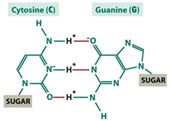
Q1. H-bonds between Cytosine and Guanine are
Answer : Option A
Explaination / Solution:
In DNA molecules nitrogenous base of complementary strands binds with hydrogen bonds. In cytosine and guanine there are 3 hydrogen bonds and in adenine and thymine, the number of hydrogen bond is 2.
Q2. Monozygotic twins are produced when
Answer : Option A
Explaination / Solution:
Monozygotic twins are produced when first cleavage of zygote is followed by separation into two parts that develops independently into two babies.
Q3. Transcription of DNA into mRNA occurs in the nucleus of the cell but translation occurs in
Answer : Option D
Explaination / Solution:
Transcription is the process of copying DNA code into mRNA. It occurs in the nucleus of the cell. The mRNA comes out of nucleus then its translation occurs into cytoplasm to form protein.
Q4. Human embryo is about an inch in length after
Answer : Option D
Explaination / Solution:
Human embryo is about one inch in length after eight weeks. The heart is formed first after one month of pregnancy.
Q5. In lac operon, lactose is the substrate for enzyme beta-galactocidase and its regulates
Answer : Option D
Explaination / Solution:
In lac operon, lactose is the substrate for enzyme beta-galactocidase and it regulates switching ON and OFF of the operon. Hence, lactose is called the inducer.
Q6. Progesterone is called pregnancy hormone as it helps in
Answer : Option D
Explaination / Solution:
Progesterone hormone is called as pregnancy hormone as it helps in maintaining pregnancy and brings about labour pain. This hormone also helps in growth and differentiation of foetus.
Q7. Lac operon consists of
Answer : Option D
Explaination / Solution:
Lac Operon consists of one regulator gene, i and three structural genes z, y and a. I gene code for repression of the lac Operon. Z gene code for beta-galactosidase, y code for permease and a gene code for transactylase.
Q8. Statement I: Milk synthesis is under control of prolactin.
Statement II: release of milk is controlled by oxytocin of pituitary glands.
Statement II: release of milk is controlled by oxytocin of pituitary glands.
Answer : Option C
Explaination / Solution:
Milk synthesis is under control of prolactin inside the memory gland. Release of milk is controlled by oxytocin released by pituitary glands.
Q9. Assertion: Regulation of lac operon by repressor is referred to as negative regulation.
Reason: Lac operon is under the control of positive regulation as well.
Answer : Option A
Explaination / Solution:
An operon is a cluster of coordinately regulated genes. It includes structural genes (generally encoding enzymes), regulatory genes (encoding, e.g. activators or repressors) and regulatory sites (such as promoters and operators).
The type of control is defined by the response of the operon when no regulatory protein is present.
The inducer–repressor control of the lac operon is an example of negative control, in which expression is normally blocked.
In contrast, the CAP-cAMP system is an example of positive control, because expression of the lac operon requires the presence of an activating signal.
Q10.
Assertion: The first milk after the birth of baby is called colostrum.
Reason: Colostrum is rich in proteins, calories and antibiotics.
Answer : Option B
Explaination / Solution:
The first milk after the birth of baby is called colostrum. It is rich in proteins, calories and antibiotics necessary for proper health of baby.